
· By Roger Wong Won
Diraq's $38M CHIPS Award: Our Read on Silicon Spin Quantum Chips
The Department of Commerce finalized a CHIPS award of up to $38 million to Diraq, a silicon spin-qubit company, on November 24, 2026. Here is what was announced, what Diraq's roadmap targets are and are not, and why chip-fab-compatible, rack-sized quantum systems matter for defense and on-premises buyers.
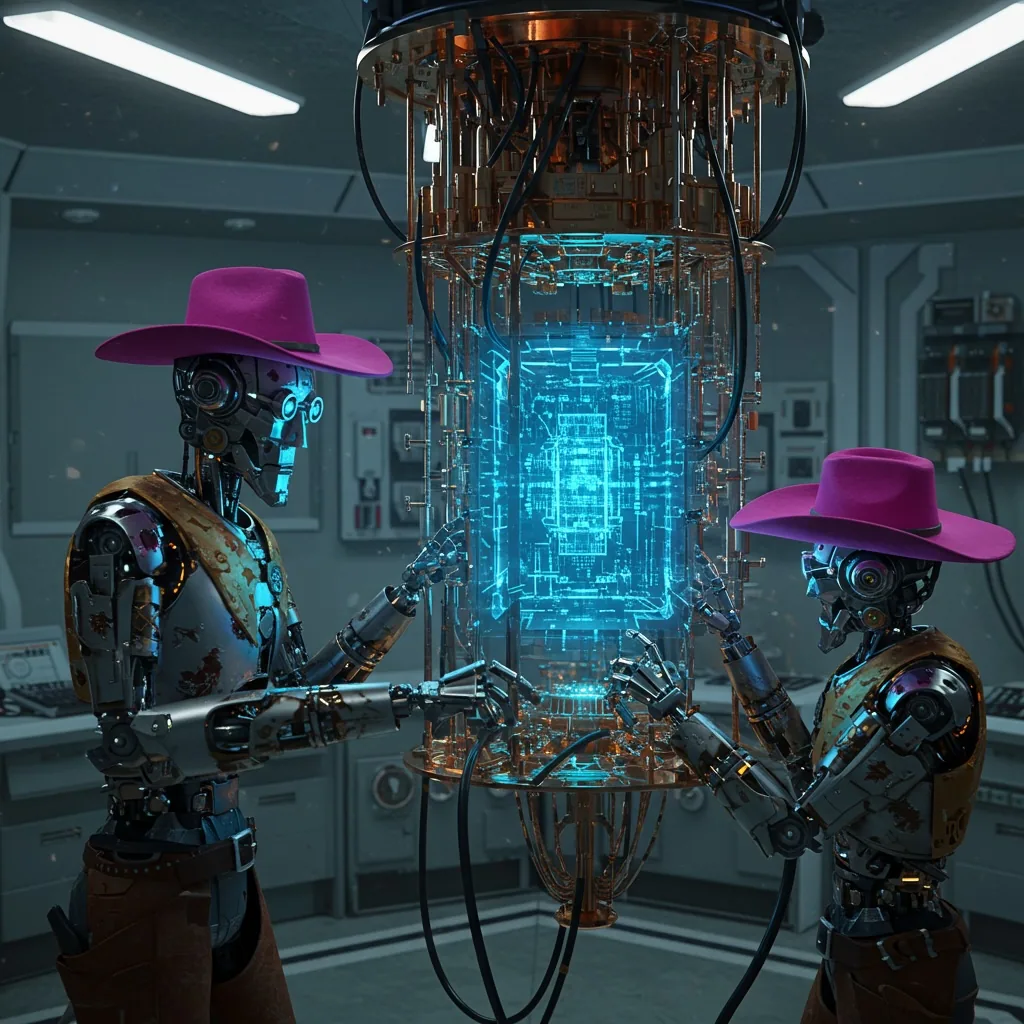
The U.S. Department of Commerce has signed a final CHIPS and Science Act award of up to $38 million to Diraq Holdings, a silicon spin-qubit quantum computing company. NIST and Diraq both announced the award on November 24, 2026, converting a Letter of Intent announced earlier this year into a definitive agreement.
This is the second finalized CHIPS quantum award we have covered this month, after Atom Computing's $100M award. The two companies build very different machines, and that difference is the point of this post.
What was announced
According to NIST, the award funds R&D on quantum semiconductor manufacturing bottlenecks for scaling fault-tolerant silicon spin quantum computers, including scalable Quantum Logic Units (QLUs), novel qubit arrays and global qubit control. The figure is a ceiling: the award is for up to $38 million, and neither release lists a disbursement schedule.
Diraq says the money will accelerate U.S. infrastructure to manufacture and test its silicon quantum processor chips. The company says it is the only silicon spin company in this round of CHIPS funding, and that it recently opened operations in Palo Alto, Chicago, Los Angeles and Albuquerque alongside its Australian research base. Diraq also says it advanced to Stage C of DARPA's Quantum Benchmarking Initiative and, this month, deployed a silicon spin quantum computer in a commercial data center with Equinix.
Diraq's stated roadmap targets 150,000 physical qubits supporting up to 1,000 logical qubits by 2029, and more than 2 million physical qubits supporting more than 10,000 logical qubits by 2031. Those are company targets, not demonstrated results.
Our read: the quantum bet is becoming a chip-fab bet
This is our interpretation, not a claim from Diraq or Commerce. Diraq says its qubits are made with the same processes and materials as the silicon chips in phones and laptops, and that its systems fit in roughly the space of four standard server racks. If that holds at scale, two things change for mission buyers.
Supply chain looks more familiar. A quantum processor built on CMOS-compatible processes can, in principle, ride the same domestic semiconductor base the CHIPS Act is funding. For defense programs that care where hardware is made, that is a more legible story than a one-off lab apparatus.
Quantum moves closer to the rack. A machine that fits in a data center row is easier to picture inside a sovereign or on-premises facility next to the GPUs and CPUs it would work with. Diraq itself frames quantum as working alongside classical computing, not replacing it. For teams that cannot send data to a public cloud, placement matters as much as qubit count.
What it does not change: no announcement here shows a useful, fault-tolerant machine today. Silicon spin, neutral atoms, trapped ions and photonics are all still racing toward logical qubits, and DARPA's Quantum Benchmarking Initiative exists precisely because nobody yet knows which approach reaches utility scale first.
Questions we would ask before any quantum pilot
Is the problem actually quantum-shaped? Most optimization and simulation work still runs better on classical and GPU systems today. Start with a clear benchmark against the best classical method.
Where would the system run? Cloud access, a colocation deployment and an on-premises install carry very different security, accreditation and data-handling implications.
Can you stay modality-neutral? Write requirements around logical qubit performance and error rates, not a single hardware vendor, so a program can move as the field shakes out.
Is post-quantum cryptography already moving? Whatever happens with hardware timelines, migrating to NIST's FIPS 203, 204 and 205 is a separate job that should not wait. See our read on Classiq's Shor compiler update.
Where The AI Cowboys fit
We have no relationship with Diraq and have not tested its hardware. Our role is vendor-neutral quantum computing integration planning for programs that also run edge and air-gapped AI: scoping where quantum might help, keeping classical baselines honest, and making sure mission data stays where it belongs.
If your program is weighing a quantum pilot or a vendor roadmap, request a briefing or email contact_us@theaicowboys.com. Defense and federal buyers can start with our government and defense page.
Common questions
How much is Diraq's CHIPS award?
Up to $38 million. NIST announced the final award on November 24, 2026 under the CHIPS and Science Act. It is a ceiling, and no disbursement schedule was published.
What makes silicon spin qubits different?
Diraq says its qubits are built with the same processes and materials as conventional silicon chips, which it argues offers a path to millions of qubits per chip and systems about the size of four server racks. Those scaling targets are company goals, not demonstrated results.
Should a defense program start a quantum pilot now?
Only with a clear benchmark against the best classical method, a decision on where the system would run, and modality-neutral requirements. Post-quantum cryptography migration should proceed regardless of hardware timelines.
Further reading
- Department of Commerce Announces Finalization of CHIPS R&D Award with Diraq NIST / U.S. Department of Commerce
- Diraq Finalizes $38M CHIPS R&D Award with U.S. Department of Commerce Diraq
- Diraq Finalizes $38 Million CHIPS R&D Award with U.S. Department of Commerce for Silicon Spin Quantum Chips Quantum Computing Report
- Atom Computing's $100M Commerce Award: What It Means for Mission Quantum Plans The AI Cowboys