
· By Roger Wong Won
Room-Temperature Quantum at the Edge: Our Read on Rotonium's Prototype
On November 23, 2026, Rotonium unveiled a four-qubit photonic quantum prototype that it says runs at room temperature with no cryogenics, aimed at robots, vehicles and satellites. Here is what was announced, what was not, and what edge and mission programs should do now.
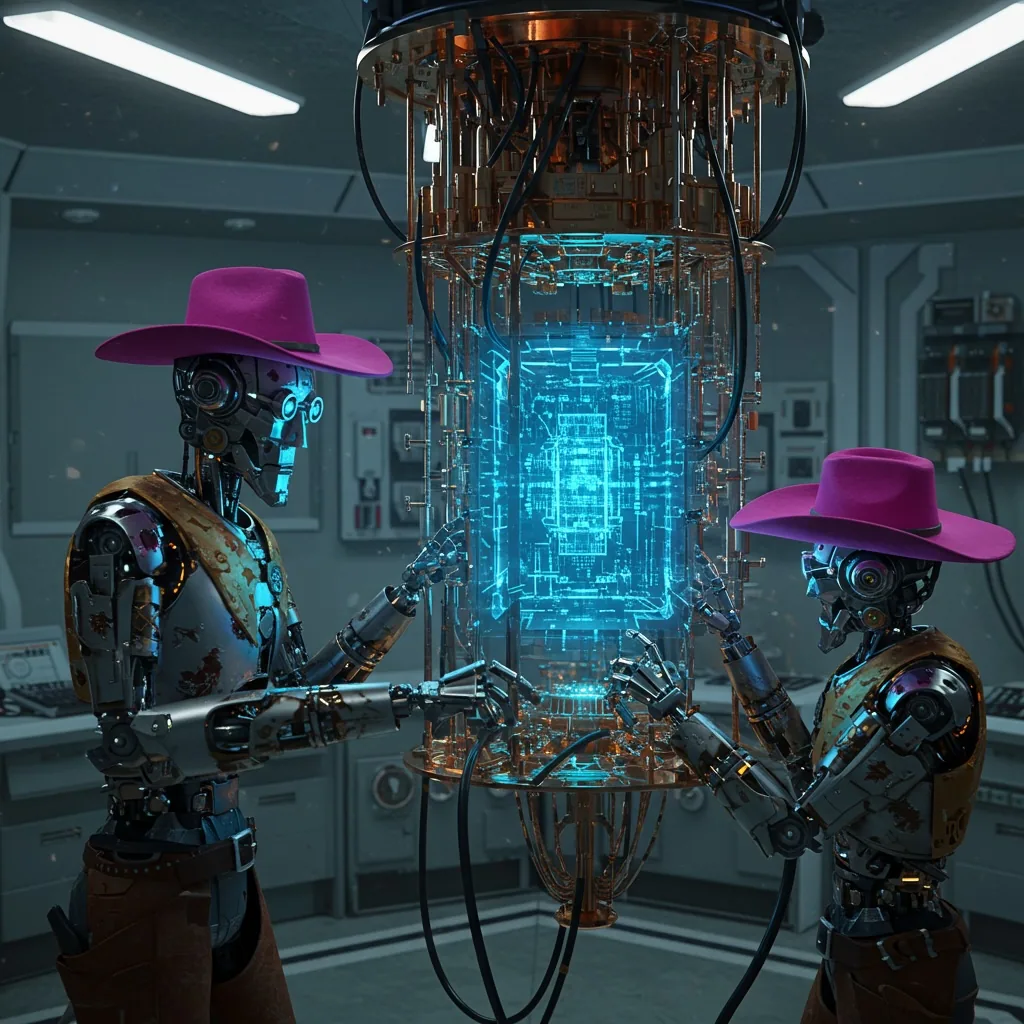
On November 23, 2026, Rotonium, an Italian photonic quantum company, unveiled a quantum computer prototype that it says runs at room temperature from end to end, with no cryogenic cooling from the single-photon source through the processor to the detectors. The processor has four effective qubits on a chip that measures 18 by 4 millimeters, and the company is pitching it at edge quantum computing: compact accelerators for industrial systems, robots, autonomous vehicles and satellites.
Four qubits will not break anything or beat a laptop. That is not why we are writing about it. The interesting part is the design target, because it lines up with the problem we work on every day: computing that has to live where the mission is, not in a data center.
What Rotonium announced
According to the company's release, published by The Quantum Insider, the prototype encodes quantum information in several properties of a single photon, so one photon can represent more than one qubit. Rotonium defines effective qubits as qubits that can be used together in a verified computation under its stated test conditions. The company says the technology is covered by six patent families, with 25 patent applications and six granted patents, and is designed for manufacturing processes compatible with silicon photonics.
Its published roadmap calls for a desktop system with 16 effective qubits in 2028, a PCI Express accelerator card with 32 effective qubits in 2029, a System-on-Module with 96 effective qubits by 2030, and thousands of effective qubits targeted by 2035. Those are company targets, not delivered products, and we treat them that way.
What the release does not include: benchmark results, error rates, the specific computations used to verify the four qubits, power draw, or pricing. Until those are published, nobody outside the company can say how this prototype compares with anything else.
Why the edge framing matters
Most quantum hardware today depends on dilution refrigerators, vacuum systems or precision lasers that tie it to a lab or a cloud provider. For the defense, intelligence and regulated teams we support, that has meant quantum is something you rent over a network, which is often exactly what they are not allowed to do. Our whole practice is built around AI for machines that cannot phone home: systems that run on-prem, air-gapped or on the platform itself.
A quantum accelerator that does not need cryogenics would, if it matures, raise the same questions we already ask of any edge processor. What does it draw in the enclosure, at the temperatures the platform actually sees? How do you validate its answer when it cannot call home to a reference system? What happens to the data path around it? Rotonium's own framing, that quantum performance is meaningless without deployability, is the right test. It is also the test this prototype has not yet been publicly measured against.
What we would tell a program office today
Watch it, do not plan around it. A four-qubit prototype is a feasibility signal. Our interpretation is that size, weight and power will become a real axis of competition in quantum hardware, but no edge program should put a quantum accelerator on a schedule based on a roadmap.
Write down the problem first. The durable asset is the same as in our read on Atom Computing's Commerce award: a short list of your own optimization, simulation or sensing problems with the classical baseline any quantum device would have to beat. That list works whether the winning hardware sits in a cloud, a rack or a satellite.
Keep the post-quantum clock separate. Hardware news, edge or otherwise, does not change the cryptography timeline. NIST finalized its first post-quantum standards, FIPS 203, 204 and 205, in August 2024, and inventorying where you rely on public-key cryptography is work for this quarter. That sits inside our cybersecurity and AI trust practice.
Ask for verification, not qubit counts. Rotonium deserves credit for defining what it means by an effective qubit. Every vendor pitch should be held to that standard: what was computed, how it was verified, and under what conditions. It is the same discipline we use to validate vendor AI claims.
Where The AI Cowboys fit
We do not build quantum hardware. Our quantum computing integration work sits between the hardware and the mission: picking problems worth piloting, designing hybrid quantum and classical architectures that can run inside a customer's environment, and preparing post-quantum migration plans. Our neuromorphic and edge work already lives under the size, weight and power limits that Rotonium says it is designing for, so we will be watching for published measurements.
If you are weighing where quantum belongs in an edge, air-gapped or mission data roadmap, request a briefing or email contact_us@theaicowboys.com. Federal buyers can start with our government and defense page.
Common questions
What did Rotonium announce?
On November 23, 2026, Rotonium unveiled a photonic quantum computer prototype with four effective qubits on an 18 by 4 millimeter chip. The company says the whole quantum chain, from photon source to detectors, runs at room temperature without cryogenics, and it targets edge uses such as robots, autonomous vehicles and satellites.
Can a defense or edge program use room-temperature quantum hardware now?
Not for production work. Four qubits is a feasibility prototype, and Rotonium has not published benchmarks, error rates or power figures. Its roadmap targets 16 effective qubits in 2028, 32 in 2029 and 96 by 2030; those are company targets, not delivered products.
What should we do about quantum today?
Start a post-quantum cryptography inventory against NIST FIPS 203, 204 and 205, and write down the specific problems and classical baselines a quantum pilot would need to beat. The AI Cowboys help with both; request a briefing at www.theaicowboys.com/contact.
Further reading
- Rotonium Unveils a Quantum Computer That Operates at Room Temperature The Quantum Insider (Rotonium press release)
- Rotonium: Photonic Edge Quantum Computers Rotonium
- NIST Releases First 3 Finalized Post-Quantum Encryption Standards NIST
- Atom Computing's $100M Commerce Award: What It Means for Mission Quantum Plans The AI Cowboys