
AI frontier lab · San Antonio
Neuromorphic & physical AI for missions that stay offline.
The AI Cowboys is a Service-Disabled Veteran-Owned AI lab in San Antonio, Texas. Most artificial intelligence needs a data center and a fast connection. We build the kind that fits on a drone, a satellite or a sensor in the field, runs on battery power, and keeps working when the network is gone. We handle the cybersecurity, training and quantum work around it.
Explore the frontier
Local ghost legendLegend says Sallie White still wanders the Menger Hotel. In San Antonio, some guests apparently never check out.Read the legend
A real bat factAbout 50,000 Mexican free-tailed bats spend summer beneath I-35 along the River Walk. Our city has a real night shift. No capes required.Read the bat facts
Local ghost legendOne Alamo legend tells of six ghostly defenders carrying flaming swords. Talk about a security system you wouldn’t want to test.Read the legend
Explore the frontier
Built for
Missions that can’t fail quietly.
- A secure federal briefing room, displays carrying teal map contours and a single signal trace
Federal & defense
SDVOSB, eligible for set-asides and sole-source awards
- A precision industrial robot arm in a white laboratory, a status light on its wrist
Robotics & autonomy
Perception on single-digit watts
- A silicon wafer diffracting light into teal and magenta iridescence
Semiconductor & data center
Event-driven silicon, benchmarked
- A small satellite in a white cleanroom with an alignment grid on the floor
Space & aerospace
Decisions made on orbit, not on the ground

Physical & embodied AI
Physical AI and embodied systems, built for contact with the world.
Perceive. Decide. Act.
Perceive, decide and act under a power budget, with no link back to anyone’s cloud. Move your cursor through the field: the sensor below is tracking you.
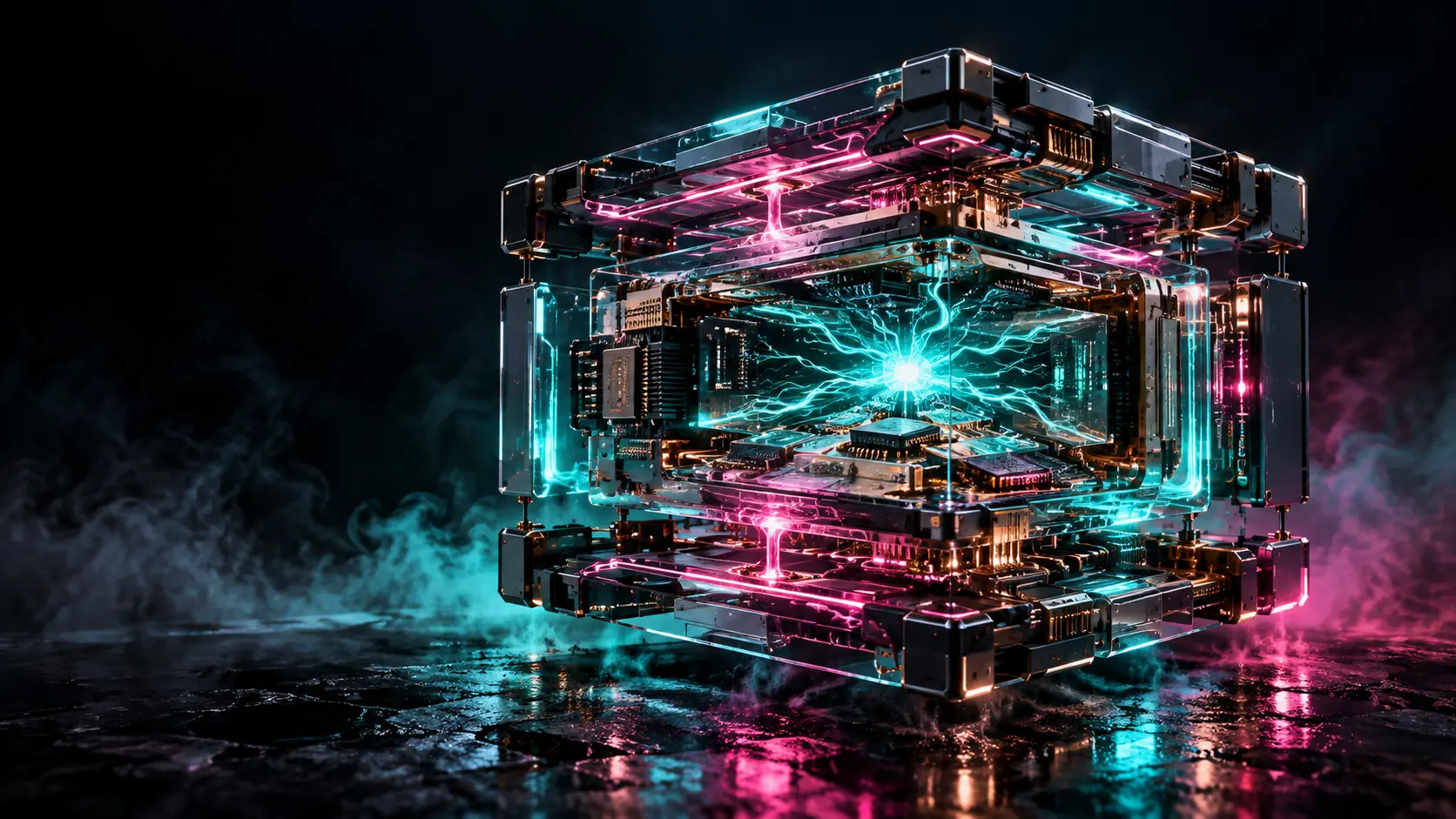
Neuromorphic computing
Neuromorphic computing at the edge of the power budget.
Compute that wakes when the world does.
Event-driven intelligence at the edge.
Interactive labStep into the sensor field
Perception under a power budget
Decide at the edge, not the datacenter
Act with the boundary enforced
See the difference
Same mission.
A different power budget.
Trigger an event and watch the two systems respond.
GPU only
120W
continuous draw
0 J energy used
Jetson + Akida
9W
event-driven
0 J energy used
Same workload, matched accuracy, measured in our San Antonio lab.
- 9W
- hybrid Jetson + Akida deploymentagainst 120W for the same workload on the Jetson alone, at matched accuracy
- 100–1000×
- lower energy per inferencefor sensory and pattern-recognition workloads on spiking networks
- µs
- response to a sparse eventno clock to wait for; the hardware reacts when the signal arrives
It is not a GPU replacement. Training large models stays on conventional accelerators, the toolchains are younger than PyTorch, and porting a model to spiking form is real engineering. The teams that benefit first pick the right workload rather than moving everything: perception, anomaly detection, always-on sensing.
What we do
Five services.
One perimeter.
Explore the work.
Choose your next frontier.
Perception that runs on watts, on the platform, in real time.
Brain-inspired processors put memory and compute together and run on events rather than a clock, so they draw power only when something happens. In our San Antonio lab, a hybrid Jetson-plus-Akida deployment held the same accuracy at 9W that the Jetson alone needed 120W to reach. That difference is what makes always-on perception deployable on a drone, a sensor or a satellite.

AI education
We teach this, not just build it.
As an NVIDIA Deep Learning Institute and IBM SkillsBuild partner, we run hands-on AI, quantum and cybersecurity training for federal, enterprise and academic teams.
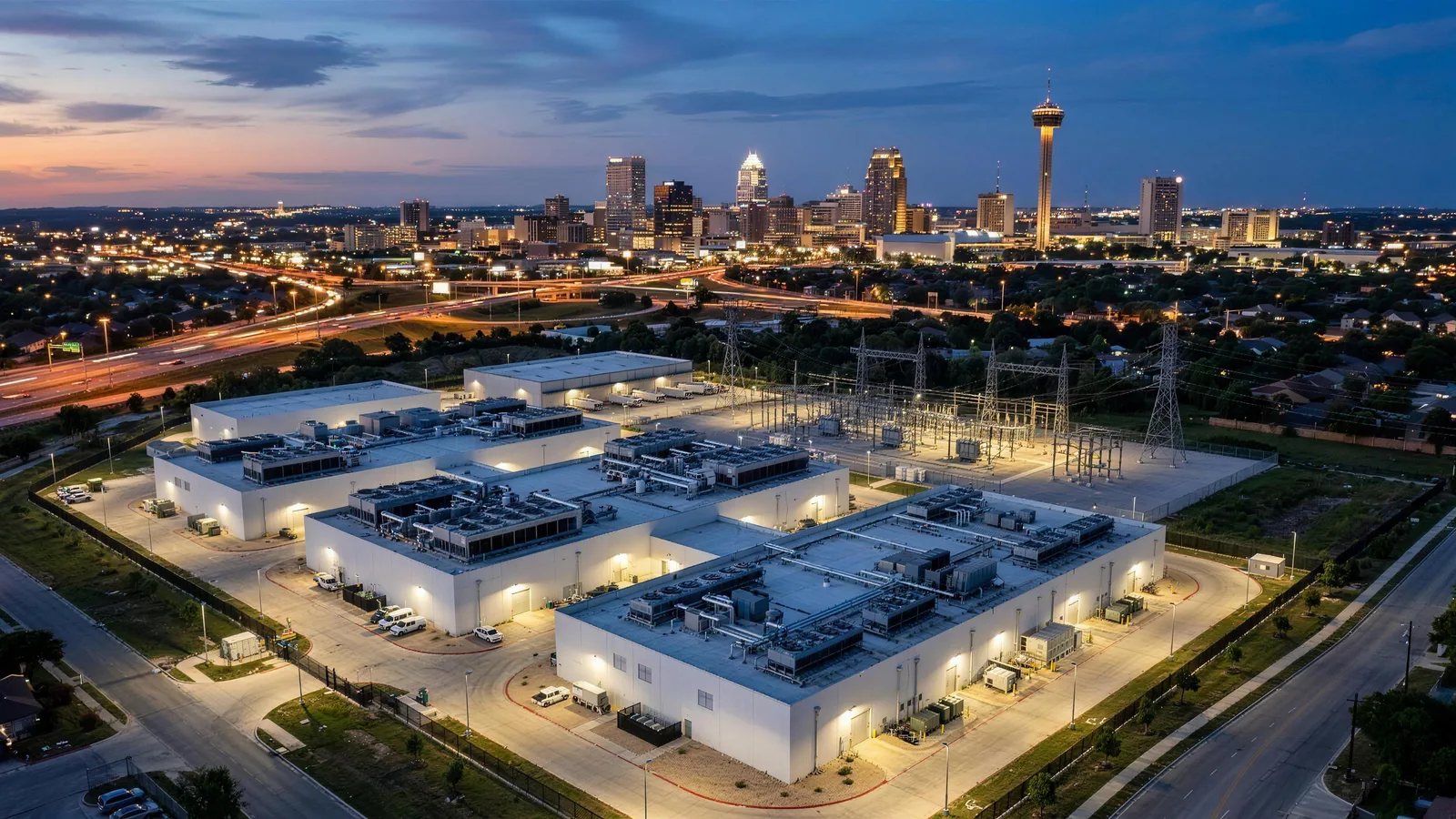
Civic project
Compute Lives Somewhere
A plain-English guide to data centers in San Antonio. Walk through one in 3D, build your own, and check the evidence.
About the explainerClient success stories
What the work has been worth.
I've worked with Michael Pendleton on several government technology projects, and his work is consistently outstanding. His recent book on Quantum Programming is a milestone in the field and will serve as essential reading for students for years to come. (Dr. Daniel Conway, Professor, University of Arkansas)
The AI Cowboys made a profound impact on our organization by generously donating laptops, empowering our San Antonio community with essential technology. Their mentorship sessions equipped local business leaders with actionable insights into leveraging AI effectively within their operations. (Lina Rugova & Christine Colburn, Founder & Co-Founder, Emerge and Rise, Inc.)
The AI Cowboys transformed our business. They expertly converted our real estate software codebase to Python, enabling us to scale seamlessly. Thanks to their technical leadership, we've positioned ourselves for growth and are now on track to generate millions in revenue. Exceptional team and highly recommended! (Andy Moon, Owner, Moon Law Firm, PLLC)
“I've worked with Michael Pendleton on several government technology projects, and his work is consistently outstanding. His recent book on Quantum Programming is a milestone in the field and will serve as essential reading for students for years to come.”

Dr. Daniel Conway
Professor, University of Arkansas














Frequently asked questions
What does The AI Cowboys do?
The AI Cowboys is a Service-Disabled Veteran-Owned AI lab in San Antonio, Texas, founded in 2024 by retired Air Force leader Michael J. Pendleton. We work on AI and neuromorphic computing, physical and embodied AI, cybersecurity, and quantum computing, and we teach all of it as an NVIDIA Deep Learning Institute and IBM SkillsBuild partner. Everything we build can deploy on-premises, air-gapped, or in your own cloud.
Who do you work with?
Federal agencies and the defense community, critical-infrastructure operators, universities and research institutions, healthcare, and enterprise. Named work includes the FBI, the NSA, the WWE and the NFL Players Association. We partner with NVIDIA, Amazon Web Services, and the University of Texas at San Antonio.
How do I start working with The AI Cowboys?
A briefing first, then a scoped pilot against one real problem before anyone commits to scale. You get a roadmap with timelines and deliverables out of the first conversation, whether or not you proceed. Email contact_us@theaicowboys.com to set one up.
Are you contract-ready for federal work?
Yes. We are a Service-Disabled Veteran-Owned Small Business registered in SAM.gov, which makes us eligible for SDVOSB set-asides and sole-source awards. Our work is aligned to NIST, CMMC and FedRAMP, with SBOM and EO 14028 practice built in.
Where is The AI Cowboys based?
San Antonio, Texas, downtown at the UT San Antonio College of AI, Cybersecurity and Computing (San Pedro I, 506 Dolorosa St). That places us inside one of the densest cyber and national-security communities in the country: Joint Base San Antonio, the NSA's Texas Cryptologic Center and 16th Air Force are all here, about an hour from Austin. We work with clients across the United States and on-site for data-sensitive projects.
Do you offer AI training and education?
Yes, and it is a substantial part of what we do. We are an NVIDIA Deep Learning Institute partner and an IBM SkillsBuild partner, running hands-on workshops in AI, machine learning, quantum computing and cybersecurity for federal agencies, enterprise teams, universities and school districts. Sessions are built around live exercises and real use cases rather than slides, and the curriculum is tailored to your sector and skill level. We also run free community workshops, including AI and the Job Market and Building Financial Readiness Through AI Tools.
Why does neuromorphic computing matter for data centers, defense budgets and robotics?
Because in all three, energy is now the binding constraint rather than a line item. Data center operators are limited by the megawatts they can get to the building, so anything always-on that can run at a fraction of the draw frees capacity for the workloads that genuinely need a GPU. In defense acquisition the constraint has a name, size, weight and power, and it decides what can be fielded on a drone, a satellite or an unattended sensor at all. In robotics it is simply runtime: perception is what drains the battery, so the power budget sets how long the machine is useful between charges. Neuromorphic silicon is event-driven, drawing power only when something happens, which is why it changes the arithmetic for continuous sensing specifically.
How much energy does neuromorphic computing actually save compared to a GPU?
In our San Antonio lab, a hybrid deployment pairing a BrainChip Akida processor with an NVIDIA Jetson held the same accuracy at 9 watts that the Jetson alone required 120 watts to reach, roughly a 90% reduction on that workload. Across sensory and pattern-recognition tasks generally, spiking neural networks on neuromorphic silicon are commonly measured at 100x to 1,000x lower energy per inference. The saving is architectural: a neuron consumes power only when it has something to report, rather than every clock cycle.
Can you run a BrainChip Akida alongside an NVIDIA Jetson?
Yes, and we have. The Akida handles always-on sensory processing at very low power while the Jetson stays idle until the Akida signals something worth escalating. That split is what produced the 9W-versus-120W result above at matched accuracy. Be clear about the cost: the model has to be converted to spiking form, and the toolchains are younger than PyTorch. But the hybrid pattern works today on hardware you can buy this quarter, which is why we recommend a bounded pilot on one real workload rather than a platform decision.
What is physical AI, and how is it different from embodied AI?
The terms overlap heavily and are often used interchangeably. Physical AI usually refers to systems that sense and act on the physical world: robots, drones, vehicles, unattended sensors. Embodied AI emphasizes that the intelligence sits in a body whose sensors and actuators shape what it can learn and do. In practice the engineering problem is the same: perception, decision and actuation have to close the loop on the platform, under a power budget, often with a degraded or absent network link.
How do I deploy an LLM in an air-gapped or classified environment?
Start with a model whose weights you are allowed to hold, because anything reached by API is off the table. Size it to the hardware you can actually put inside the enclave; a well-tuned Small Language Model on your own corpus usually beats a larger general model there. Then plan the parts people forget: model and dependency supply chain with an SBOM, an update path that works without outbound network, evaluation harnesses that run inside the boundary, and audit logging your accreditor will accept.
How can I verify a human is behind an AI agent, continuously rather than at login?
Continuous verification reads behavioral signal, such as how a person types, moves and hesitates, and re-establishes identity throughout a session rather than once at sign-in. It matters because agentic AI can now operate any interface a person can, so a credential checked at the login screen proves nothing about who is acting ten minutes later. Our product MagenTrust does this with behavioral biometrics, processed locally: cannot be phished, and needs no second device in the operator's hand.

Your next frontier
Start with a conversation.
A briefing first. A scoped pilot around one real problem.
Request a briefing