
· By Roger Wong Won
Atom Computing's $100M Commerce Award: What It Means for Mission Quantum Plans
On November 13, 2026, the Department of Commerce finalized a CHIPS R&D award of up to $100 million to Atom Computing for utility-scale, fault-tolerant neutral-atom quantum computers. Here is what was announced, what was not, and what mission programs should do before the hardware arrives.
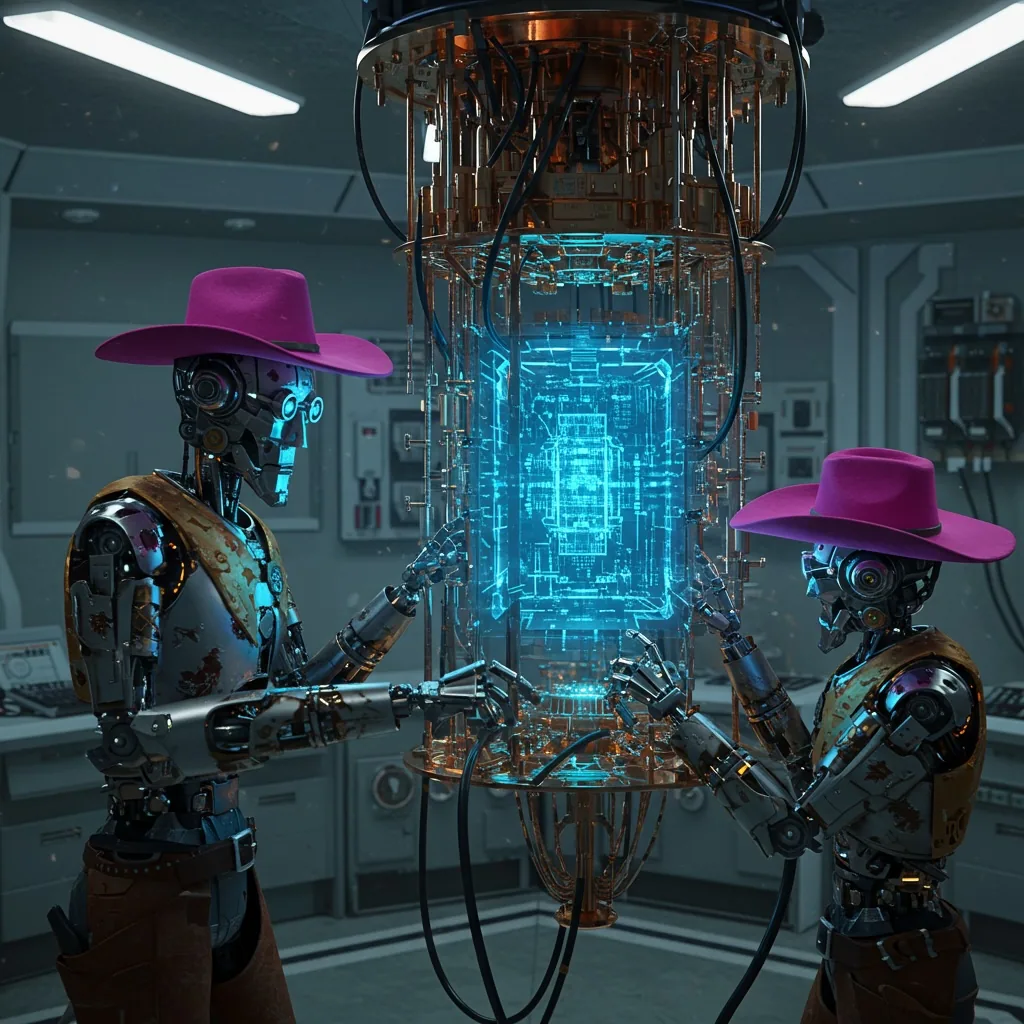
On November 13, 2026, the U.S. Department of Commerce's CHIPS Research and Development Office announced a final R&D award of up to $100 million to Atom Computing, a neutral-atom quantum computing company. According to NIST, the money goes to semiconductors and related technology for utility-scale neutral-atom quantum computers, including the hardware and systems integration needed to manipulate, control and address tens of thousands of qubits, and to validate their performance. The award finalizes a Letter of Intent announced earlier this year.
That is a hardware and manufacturing story. Our read is about what it does and does not change for the defense, intelligence and regulated teams we work with.
What was actually announced
Atom Computing says the contract will fund three things: developing critical technologies in-house for performance, reliability and vertical integration; expanding parallel engineering and testbed infrastructure so it can validate changes faster; and deeper R&D work with supply chain partners to prepare for manufacturing at scale. The company also says it was recently selected as the only neutral-atom company to advance to Stage C of DARPA's Quantum Benchmarking Initiative, with potential funding of up to $300 million.
The company's other claims, in its own words: it was first to build a platform with more than 1,000 qubits, first among neutral-atom companies to show sub-threshold behavior with full, end-to-end quantum error correction over many rounds, and first to commercially offer a logical-qubit quantum computer. In 2025 it sold an on-premises system to QuNorth, a Nordic quantum initiative. Those are vendor statements, and we report them as such.
What the announcement does not include: a payment schedule, technical milestones, or a date when a fault-tolerant, utility-scale machine will be available to customers. Anyone telling you this award puts one in your building next year is guessing.
Why the federal bet matters to mission programs
The signal is not the dollar figure. It is that federal money is now going to manufacturing, testbeds and supply chain, the unglamorous work between a lab result and a machine you can buy, install and audit. For a program office, that shifts quantum from a pure research watch item toward something that needs a readiness plan, even if the useful hardware is still years out.
It also matters that Atom's commercial sale was an on-premises system. The customers we serve rarely get to send sensitive workloads to a shared cloud. If quantum hardware arrives as something that can sit inside a customer's facility, the same questions we already ask about on-prem and air-gapped AI apply: who controls the system, what leaves the perimeter, and how you validate results you cannot check against a public benchmark.
What we would do now, before the hardware arrives
Do not wait on cryptography. The threat to today's public-key encryption does not depend on any single vendor's schedule, and NIST approved its first post-quantum cryptography standards, FIPS 203, 204 and 205, in August 2024. Inventorying where your systems use public-key cryptography and planning the migration is work you can start this quarter. That sits squarely inside our cybersecurity and AI trust practice.
Pick the problems, not the platform. Neutral-atom, superconducting, trapped-ion and photonic machines are all still competing. The durable asset is a short list of your own optimization, simulation or sensing problems, written down with the classical baseline you would have to beat. That list survives whichever hardware wins.
Plan for hybrid. Useful quantum work will run beside classical and AI systems, not instead of them. Build data pipelines and evaluation harnesses that can hand a sub-problem to a quantum backend and check the answer, so a pilot is a swap rather than a rebuild.
Treat benchmarks as claims to verify. Physical qubit counts are not the same as useful, error-corrected capacity. The same discipline we apply when we validate a vendor's AI robustness claims applies here: ask what was measured, on which system, under what conditions.
Where The AI Cowboys fit
We are not building quantum hardware. Our quantum computing integration work is the layer in between: identifying the problems worth piloting, designing hybrid quantum-classical architectures that can run inside a customer's environment, and preparing post-quantum migration plans for programs that cannot afford to be late. For federal buyers, our government and defense page covers how we engage as a San Antonio SDVOSB.
If your program needs a quantum readiness plan or a post-quantum cryptography inventory, request a briefing or email contact_us@theaicowboys.com.
Common questions
What did the Department of Commerce award Atom Computing?
On November 13, 2026, Commerce's CHIPS Research and Development Office announced a final R&D award of up to $100 million to Atom Computing. NIST says it funds semiconductors and related technology for utility-scale neutral-atom quantum computers, including hardware and systems integration to control and address tens of thousands of qubits and validate their performance.
Does this mean fault-tolerant quantum computers are available now?
No. The announcement does not give a date for a fault-tolerant, utility-scale system or publish technical milestones. It funds engineering, testbeds and manufacturing scale-up toward that goal.
What should a defense or regulated program do about quantum today?
Start the post-quantum cryptography migration, since NIST approved FIPS 203, 204 and 205 in August 2024. Then document the specific optimization, simulation or sensing problems worth piloting, with the classical baseline to beat, and plan hybrid quantum-classical pipelines that can run inside your own environment.
Further reading
- Department of Commerce Announces Finalization of CHIPS R&D Award with Atom Computing Inc. NIST
- Atom Computing Finalizes $100 Million U.S. Department of Commerce R&D Award to Accelerate Fault-Tolerant, Utility-Scale Quantum Computing Atom Computing
- Atom Computing Finalizes $100 Million U.S. Department of Commerce R&D Agreement for Fault-Tolerant Quantum Systems Quantum Computing Report
- Post-Quantum Cryptography FIPS Approved (FIPS 203, 204 and 205) NIST CSRC
- Quantum Computing Integration: Powering the Next Wave of AI Innovation The AI Cowboys