
· By Roger Wong Won
Shor's Algorithm for RSA-2048 Compiles in Seconds: Our Read on Classiq's Update
Classiq says its Qmod compiler now synthesizes the period-finding core of Shor's algorithm for a 2048-bit, RSA-sized number in under ten seconds. No key was factored and no hardware run was reported. Here is what changed, what did not, and why it is a reason to move on post-quantum cryptography for edge and mission systems.
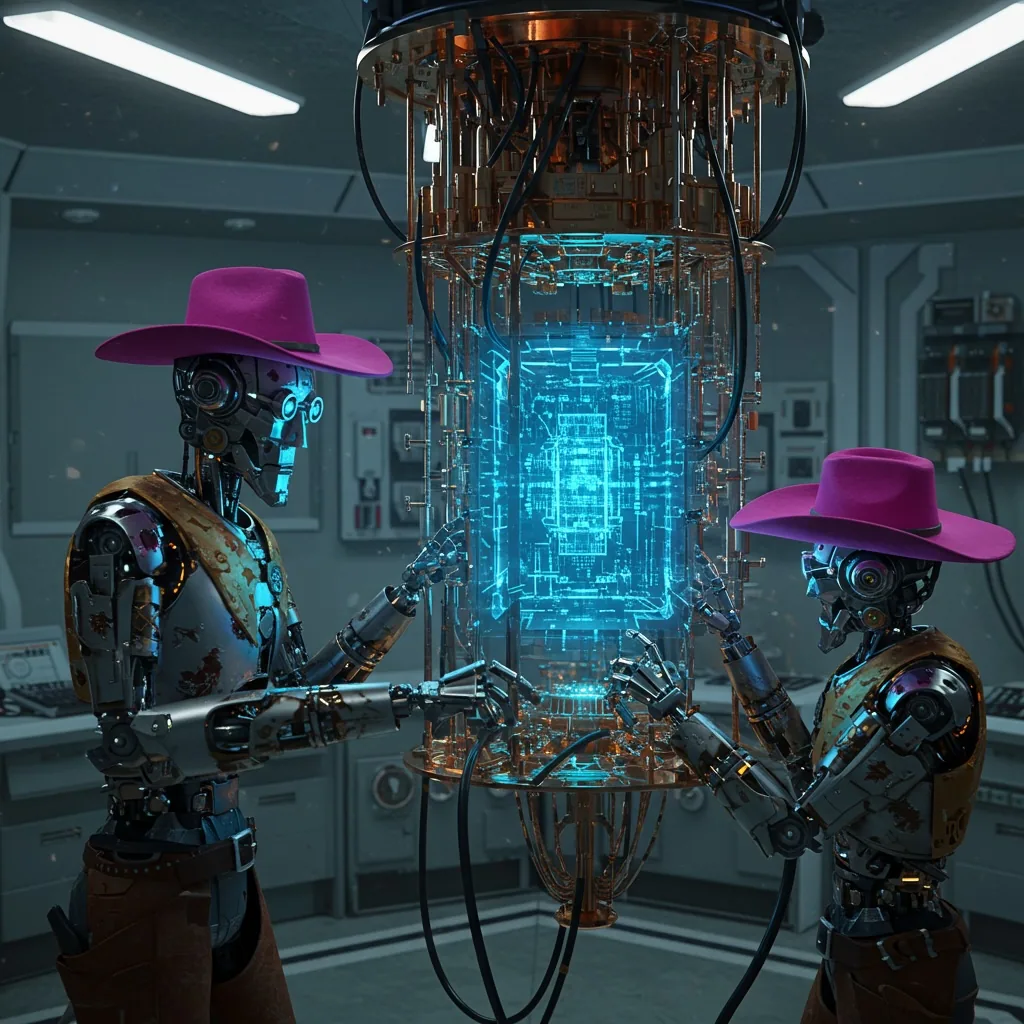
Classiq says its Qmod compiler can now synthesize the quantum period-finding subroutine of Shor's algorithm for a 2048-bit, RSA-sized number in under ten seconds. The technical write-up by Classiq's Matan Vax is dated November 19, 2026, and Quantum Computing Report covered it on November 25.
Headlines with "2048-bit" and "Shor" in them tend to get read as "RSA is broken." It is not, and Classiq does not say it is. What changed is the software side of the problem, and that is worth a few minutes for anyone who owns encrypted mission data.
What Classiq announced
According to Classiq, traditional quantum compilers output flat circuits: loops are unrolled and subroutines are copied for every parameter value. At realistic algorithm sizes that produces enormous programs that are expensive to process. Over the past six months, Classiq says, its compiler has learned to keep classical control structures such as loops and conditionals intact through synthesis, and to let a loop variable index into an array of qubits symbolically.
The result Classiq reports is that arithmetic building blocks, the quantum Fourier transform and quantum phase estimation synthesize in nearly constant time as input size grows. For a 2048-bit semiprime, the period-finding program synthesized in under ten seconds on the Classiq platform. The base used in each Shor iteration stays a runtime parameter, so for a fixed number the program is compiled once and reused.
What it does not mean, in Classiq's own words: executing large quantum algorithms remains well beyond the reach of current quantum hardware, and classical simulation is practical only for toy-scale instances. The company frames the gain as letting programmers analyze realistic-scale algorithms and as a foundation for execution systems as hardware improves. No key was factored, and no hardware run was reported.
Our read: compiling is not cracking, but the stack is getting ready
This is our interpretation, not a Classiq claim. For years, one quiet comfort in quantum risk discussions was that the whole toolchain for cryptanalytically relevant quantum computing was immature, not just the hardware. Results like this chip away at the software part of that comfort. When hardware does arrive, the code to point at RSA-2048 is less likely to be the bottleneck.
The timing that matters for buyers is not when a quantum computer breaks RSA. It is how long your data has to stay secret. Adversaries can record encrypted traffic today and decrypt it later, which NIST calls the "harvest now, decrypt later" threat. Sensor feeds, targeting data, contract records and identity systems built today can easily need protection past 2035.
The federal clock is already set. NIST's final IR 8547, published in October 2026, deprecates quantum-vulnerable public-key algorithms, RSA included, after 2030 and disallows them under NIST standards after 2035. It also notes that under Executive Order 14412 and OMB Memorandum M-26-15, high value assets and high impact federal systems must adopt post-quantum key establishment by December 31, 2030 and post-quantum signatures by December 31, 2031. The replacement standards are FIPS 203, 204 and 205.
What we would ask any program now
Do you know where RSA and elliptic-curve keys live? Build a cryptographic inventory that includes edge devices, sensors, firmware signing and the AI pipeline, not just web servers and VPNs.
Which data must stay secret past 2035? Rank systems by how long their data stays sensitive. Those are the ones exposed to harvest now, decrypt later, and the ones to move first.
Can your fielded hardware be updated? Air-gapped and edge systems often run for a decade without a crypto refresh. If a device cannot take a post-quantum update, the migration plan is a hardware plan.
Are your AI systems in scope? Model weights, training data, signed model artifacts and agent credentials all depend on the same public-key cryptography. Treat them as crypto assets in the inventory.
Where The AI Cowboys fit
We have no relationship with Classiq and have not tested its compiler. Our work sits on both sides of this story: vendor-neutral quantum integration planning, and cybersecurity and AI trust work for edge and air-gapped systems where crypto updates are hardest. For context on the hardware side, see our read on Atom Computing's fault-tolerant quantum award, and for the compliance side, our guide to CMMC and AI tools for defense contractors.
If your program needs a post-quantum readiness review that covers edge devices and AI pipelines, request a briefing or email contact_us@theaicowboys.com. Defense and federal buyers can start with our government and defense page.
Common questions
Did Classiq break RSA-2048?
No. Classiq reported that its Qmod compiler synthesizes the quantum period-finding subroutine of Shor's algorithm for a 2048-bit number in under ten seconds. No key was factored, and Classiq says executing algorithms at this scale remains well beyond current quantum hardware.
Why should security teams care about a compiler result?
It shows the software for running Shor's algorithm at RSA scale is maturing ahead of the hardware. Because adversaries can harvest encrypted data now and decrypt it later, data that must stay secret past 2035 is already at risk, and NIST's final IR 8547 deprecates RSA after 2030 and disallows it after 2035.
Where should an organization start on post-quantum cryptography?
Start with a cryptographic inventory that includes edge devices, firmware signing and AI pipelines, rank systems by how long their data stays sensitive, and check whether fielded hardware can accept post-quantum updates under FIPS 203, 204 and 205.
Further reading
- Compiling Shor's algorithm for any RSA key size in seconds: scalability in the Qmod compiler Classiq
- Classiq Updates Qmod Compiler to Synthesize 2048-Bit Shor's Algorithm in Under 10 Seconds Quantum Computing Report
- NIST IR 8547: Transition to Post-Quantum Cryptography Standards (final, October 2026) NIST CSRC
- Atom Computing's $100M Commerce Award: our read The AI Cowboys
- CMMC and AI tools for defense contractors The AI Cowboys